How Partners Are Providing Career Exposure for Middle Schoolers
That shared goal shows up in three connected ways: large-scale exposure, school-based pathways, and youth choice itself.
Getting Every Student in the Room
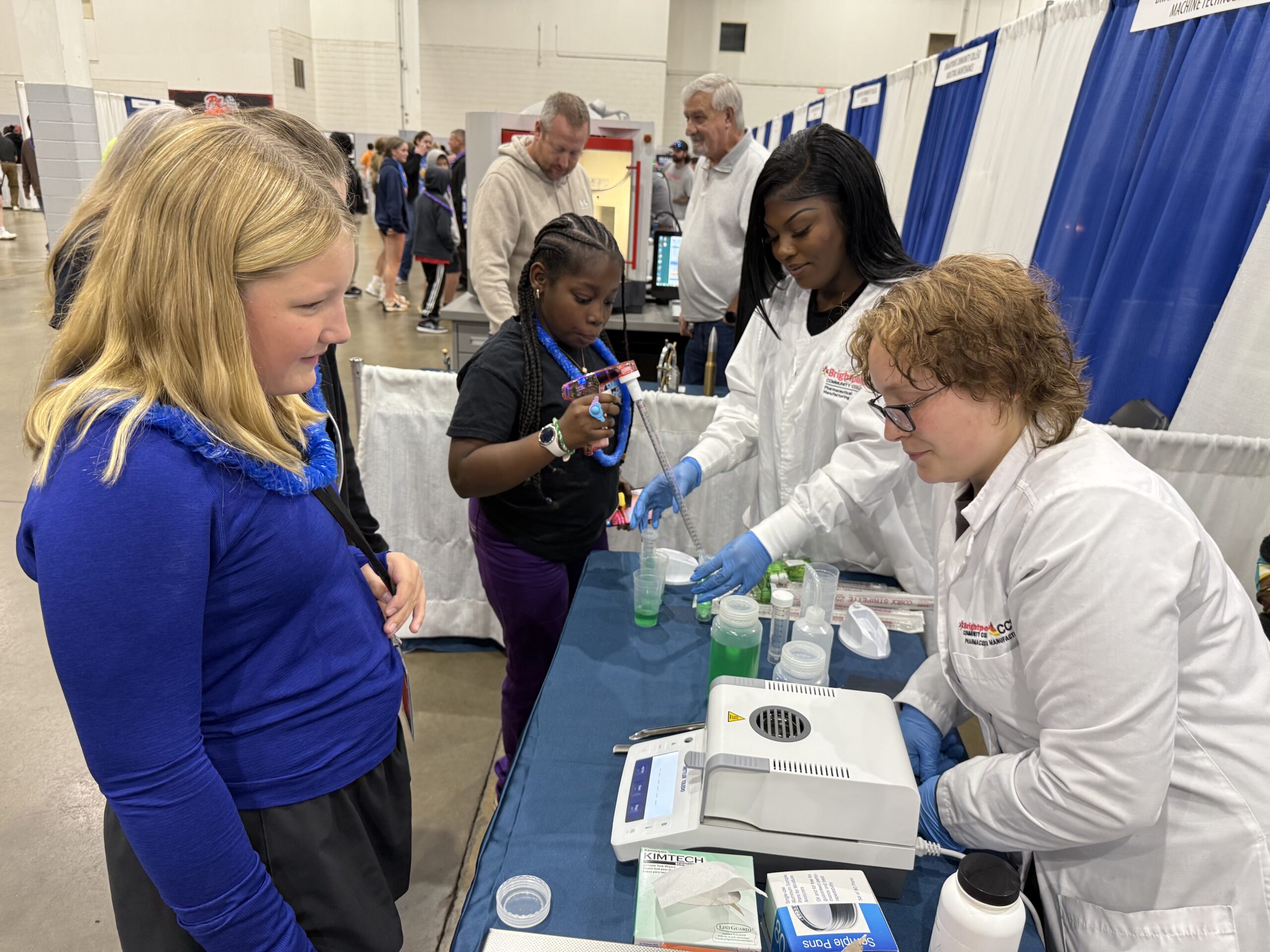
A powerful example of this work is Mission Tomorrow, an annual three-day event presented by ChamberRVA at Richmond Raceway. In 2025 alone, it connected over 12,000 eighth graders with more than 150 local exhibitors, after students worked through a Junior Achievement curriculum and rotated through six career zones on-site. The results back up the design: 82% of attendees discovered new careers across the region, and 79% wanted to learn more about fields they'd explored.
"It’s true career exploration," said Erum Manzur, Senior Program Manager at ChamberRVA. "Because we don't dictate their experience, it gives our kids the opportunity to see themselves in a different light."
While it only happens three days a year, it is often the first time a student can choose a career that speaks to their interests and goals.
Turning Possibilities into Deeper Exploration
Once exposed to what is possible, students are eager to learn more. That's where school systems come in. Hanover County Public Schools have participated in Mission Tomorrow since it began 11 years ago and built its own infrastructure alongside it, including specialty CTE classes, career counselors, career days, and field trips to local employers. "It's all about getting them exposed to different careers," Roerink said, "to provide opportunities to explore different pathways that connect to their interests."
A clear sign of demand is seen in two of Hanover's CTE specialty centers: The Hanover Center for Trades and Technology and the Hanover Health Sciences Specialty Center, where applications and enrollment continue to grow. Success stories, like those students who have put down payments on their first homes within three years of graduating high school, have helped prospective students see immediate, high-income opportunities in these pathways.
Letting Students Choose Their Own Path
If Mission Tomorrow is about scale and Hanover is about infrastructure, NextUp represents a system built around youth agency from the start. The out-of-school time intermediary works with Richmond Public Schools, city government, and community partners, connecting young people to more than 150 vetted youth development programs rather than delivering one fixed curriculum.
"We work with youth and learn about the careers they're interested in," Dr. Lamy said. "They're able to select and identify the programs they want to see offered in their schools. Middle schoolers and all young people not only have a voice, but they also have a choice."
That design does two things. It exposes students to careers they didn't know existed, and it teaches them that their future is something they get to direct. "We're now opening their eyes to careers early on," Dr. Lamy said, "and we can foster more of those experiences when we work and strategize together, both as a community and as a region."
Why It Takes the Whole Region
What connects a three-day event, a school division's CTE program, and an out-of-school-time network is the conviction that none of them can create the entire pipeline on their own. Mission Tomorrow needs the employers who show up as exhibitors; Hanover's curriculum and enrichment opportunities depend on those same relationships; NextUp's model works well because it points young people to an existing network of 150-plus programs. That’s the region’s approach to economic mobility, too – not one institution solving the problem, but schools, employers, and community organizations each taking a piece of it, in coordination.
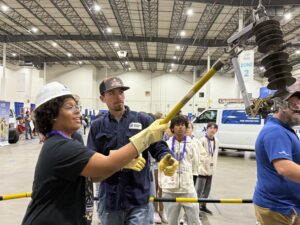
For Manzur, watching success unfold is best described by one moment, repeated thousands of times: "Seeing that spark in a student's eyes. It is the most deeply impactful moment, and I get to just step away and let the magic truly happen."
That spark, backed by real pathways that extend beyond a single memorable day, may be the difference between inspiration and a genuine head start toward stability and belonging in the region.